





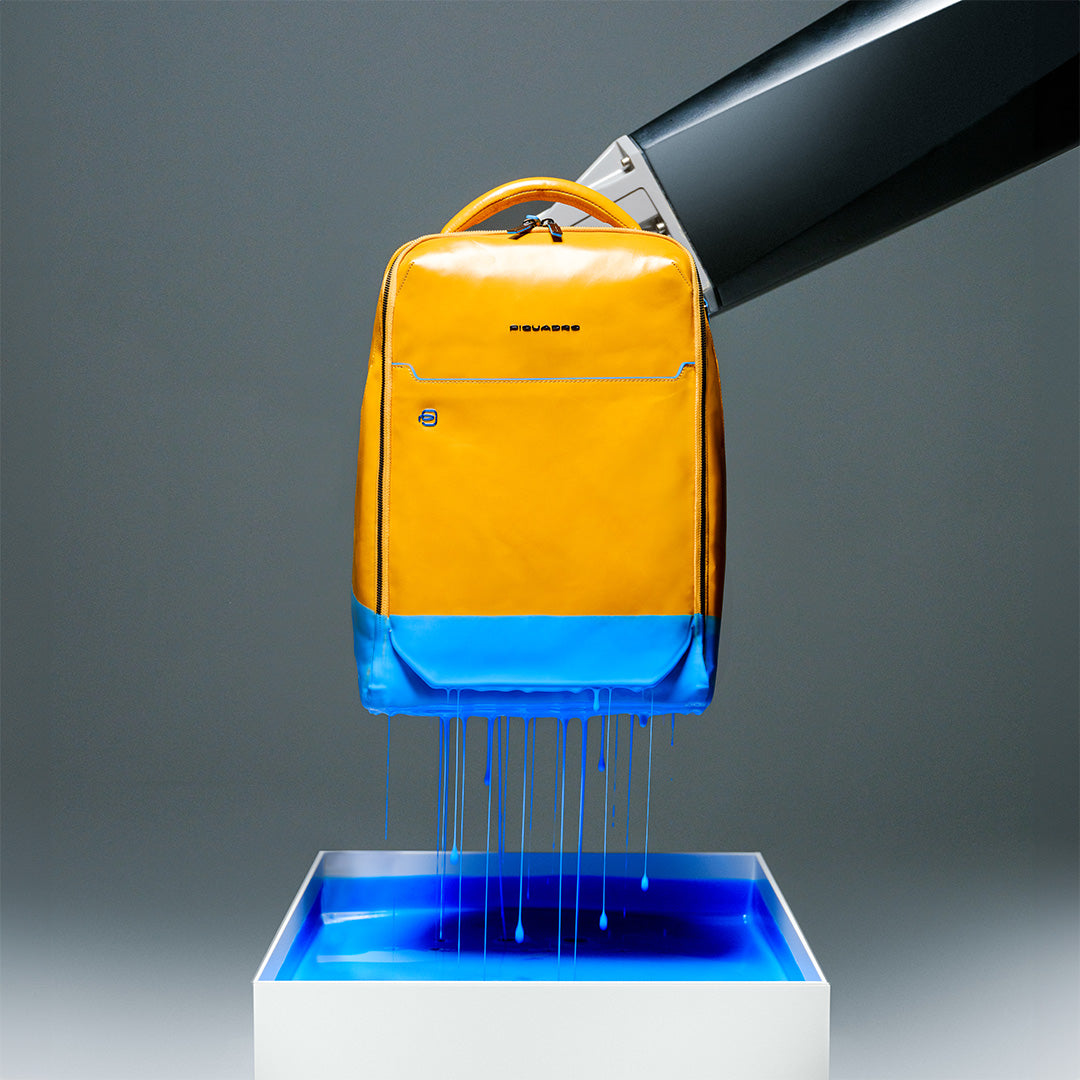





A leather bag is much more than an accessory: it’s a daily companion that follows you through work, travel and everyday moments. But because it lives alongside you, it’s only natural that it may get dirty or stained. The good news is that with the right steps, you can remove blemishes and preserve the quality of the leather without compromising its structure or appearance.
With Piquadro, innovation and care for materials meet: leather is chosen, treated and tested to last over time. Here, then, is a practical guide to keep your bags and backpacks always impeccable, with the precision and attention that distinguish the brand.
Table of Contents
- How to remove stains from leather bags or backpacks in an easy way
- When to contact a specialized center
- FAQ on how to clean stains on leather bags
How to remove stains from leather bags or backpacks in an easy way
Every mark on leather tells a story, but not every stain has to stay. The secret is a precise approach: identify the type of spot, act with the right products and adopt some simple prevention practices to keep the leather always perfect.
Understanding the type of leather and the nature of the stain
Before acting, it is essential to know the type of leather and the nature of the stain. Piquadro products can be made of smooth, hammered, vegetable tanned or water-repellent finishes. Each reacts differently to products and liquids.
- Water stains: as they dry, they often leave a light mark around the edges.
- Grease or oil stains tend to seep into the leather and require a gentle approach.
- Ink or pen stains: These should be treated carefully, as some solvents can alter the color.
- Dust and surface dirt: they are removed with regular and light cleaning.
First rule: never improvise. Always test any product on a small, hidden part of the bag.
Remove water stains
It may seem paradoxical, but water is one of the most frequent causes of spots on the leather. When drying, it can leave streaks or lighter edges.
To remove them:
- lightly dampen a soft microfiber cloth.
- Gently dab the affected area, blending outwards to even out the tone.
- Let it dry naturally, away from direct light or heat sources.
- Once dry, apply a small amount of neutral leather cream to rehydrate the surface.
Never use a hair dryer or coarse fabrics: heat and rubbing damage the natural fibers of the leather.
Removing grease or oil stains
Oily stains are among the most feared, but with the right strategy they can be reduced or eliminated.
- Immediately dab the excess with a clean cloth, without rubbing.
- Apply a thin layer of a natural absorbent powder, such as talc or cornstarch.
- Leave it on for a few hours, even better overnight, then gently remove with a soft brush without ever rubbing.
- In case of persistent stains, you can use a specific detergent for natural leather, always testing it first.
Treating ink stains
Ink stains are among the most difficult to treat: intervening without the appropriate tools risks fixing them further and, in any case, home remedies do not offer a real solution. If this happens, act gently:
- Apply a small amount of cream with a cotton cloth, gently patting without rubbing.
- Do not insist on aggressive products: alcohol, solvents or home remedies risk damaging the leather and fixing the stain.
- Rely on a professional: they can assess the type of ink and use targeted techniques to reduce its visibility in the safest way.
To protect your accessory over time, avoid improvised tests: the best care, in these cases, is that performed by expert hands.
Daily cleaning: prevention is better than cure
Daily maintenance is the easiest way to preserve the quality of your leather and prevent the appearance of permanent spots. After each use, it only takes a few steps to keep your bag in perfect condition:
- Gently wipe the surface with a soft, dry cloth.
- Avoid contact with damp or dusty surfaces.
- If the leather gets wet, immediately dab with a clean cloth, without rubbing.
- Store the bag upright, inside a breathable bag and away from heat sources.
Piquadro leather is the result of a refined balance between technological research and craftsmanship: each finish is tested to withstand daily use, light and liquids, while maintaining the natural breathability of the material. To preserve it over time, use specific products for the leather, free of silicones and parabens, and periodically apply a nourishing balm to keep it soft and elastic. When not in use, keep its shape by filling it with soft paper or fabric and storing it in a cool, dry place.
Piquadro technology was born right here: a balance between design, functionality and durability, designed to accompany you every day with style and intelligence.
When to contact a specialized center
If the stain is extensive or the leather is particularly delicate, it is advisable to contact the Piquadro assistance service directly, which has the skills and the most suitable materials to intervene without damaging the product.
During the warranty period, any material or manufacturing defects can be reported through the Return Request for Repair area on the official Piquadro website.
If the repair is not covered by warranty, Piquadro will provide a detailed estimate before proceeding with any intervention.
A professional intervention carried out by the Piquadro team guarantees optimal results, preserving the aesthetics, functionality and value of your accessory over time.
FAQ on how to clean stains on leather bags
How to clean leather bags naturally?
Leather is a living and precious material, which requires delicate and specific treatments. For this reason, we do not recommend home remedies or the use of untested substances (such as vinegar, alcohol or common detergents), which can alter the color or finish.
The safest and most "natural" way to clean a leather bag is to use a soft cloth slightly moistened with water, followed by a neutral leather care product. This preserves elasticity and shine without damaging the surface.
How to remove dirt stains from the leather?
To remove surface dirt, light and constant cleaning is sufficient. Use a dry cloth or a cloth moistened with a little water, passing with circular and gentle movements. If the stain persists, you can apply a small amount of detergent specifically designed for natural leather, leaving it on for a few moments and then removing it with a clean cloth.
Always avoid rubbing or using abrasive sponges: the leather should be treated with the same care with which it was made.
How to remove ballpoint pen stains from a leather bag?
Pen stains are some of the most difficult to treat, and without the right tools, you can even set them further. Intervene gently: use a little cream on a cotton cloth, without rubbing, and avoid household products or aggressive solvents. For safe removal, it is always advisable to rely on a professional, who will be able to assess the stain and intervene with targeted techniques to reduce its visibility.
After cleansing, apply a nourishing cream to restore the balance of the surface.
Avoid alcohol-based products or solvents: they can discolor the leather or make it dull.
If the stain is extensive, the best choice remains to rely on Piquadro assistance, for a targeted and safe intervention.
Conclusion
A stain doesn't have to scare you: it's part of the life of a lived-in, authentic object. The important thing is to know how to intervene with awareness and method, respecting the quality of the leather. Taking care of your Piquadro bag means not only maintaining its beauty but also prolonging its history. Because every sign, if treated with care, becomes part of your journey, just as every detail signed by Piquadro is designed to accompany you over time, with style and intelligence.



Comments (0)
There are no comments for this article yet.
Leave a comment