





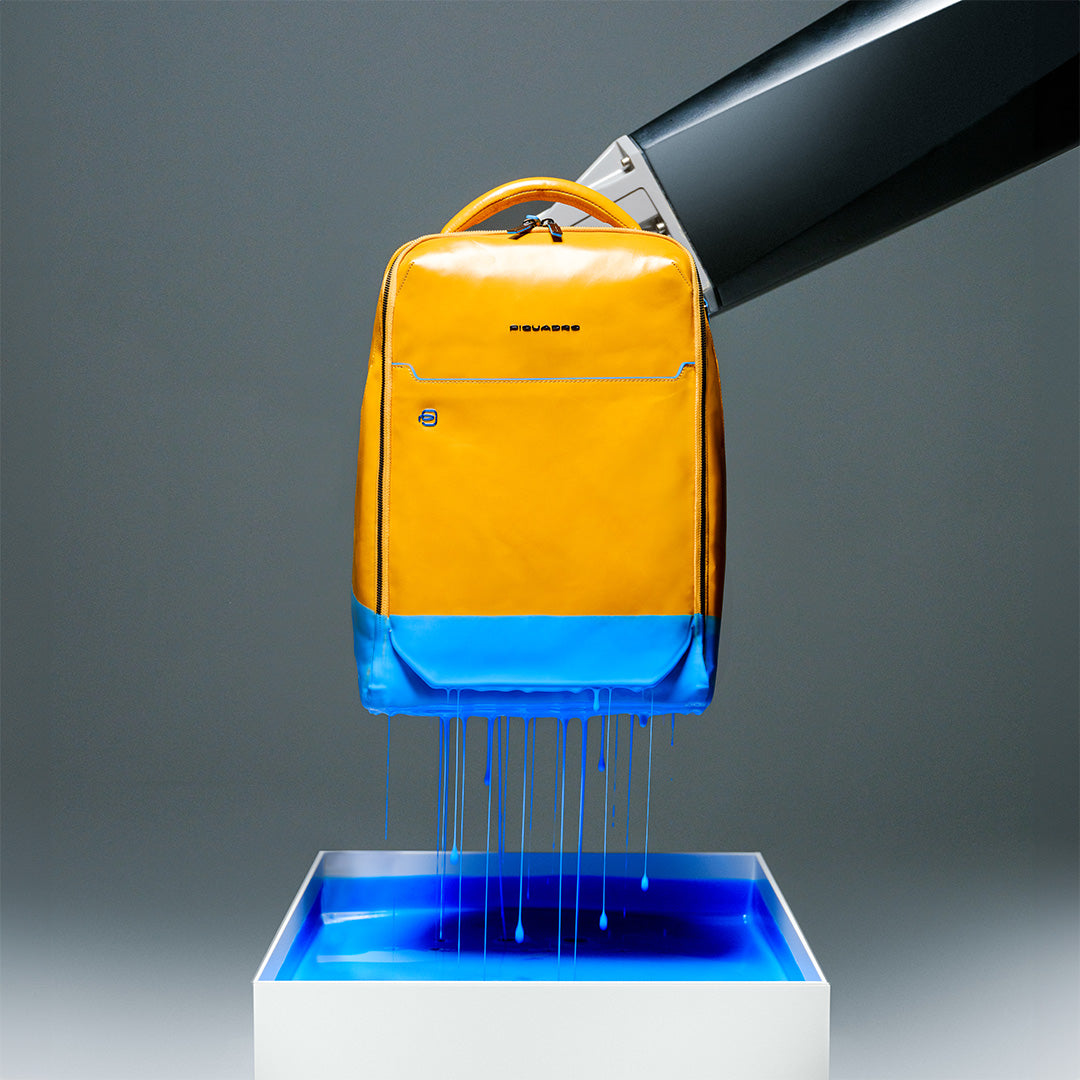





In the world of business and lifestyle accessories, knowing the parts of a bag is not just a matter of terminology, but a real added value. For those who choose a product by Piquadro, design and functionality come together in a precise technical language, made of details, materials, and components designed to enhance everyday use.
In this article, we clearly explore all the components of a bag, from the most common names to more technical elements, helping you navigate confidently through style, ergonomics, and innovation.
Table of contents
- Main structure of the bag
- External visible parts
- Closure systems
- Internal elements
- Technical components and functional details
- Materials and innovation
- FAQ – Frequently Asked Questions
Main structure of the bag
The body of the bag
The body of the bag represents its main structure—its “shell.” It defines shape, size, and capacity. It can be rigid or soft depending on the intended use. In business models, it is often designed to protect electronic devices and documents.
The bottom
The bottom of the bag ensures stability and durability. In high-end products, it is often reinforced or equipped with metal feet to prevent wear. In Piquadro products, it is frequently padded to absorb shocks and reduce damage risk.
The sides
The sides connect the front and back and determine the bag’s depth. In expandable bags, they may include a zip to increase capacity. Some models feature side loops for accessories such as tags or clips.
External visible parts
Handles
The handles are the main grips, designed for comfortable hand carrying. In business bags, they are often reinforced to support heavier loads. Some backpacks include a retractable side handle for horizontal use.
Shoulder strap
The shoulder strap allows the bag to be worn over the shoulder or crossbody. It can be adjustable, removable, and padded, improving ergonomics and comfort.
Flap
The flap covers the bag’s opening. Beyond aesthetics, it provides protection and security, often integrating closure systems.
External pockets
External pockets allow quick access to frequently used items. They may be open or zippered and are essential for functionality.
Some side pockets feature waterproof and thermal linings, functioning as bottle or umbrella holders, with a metal drainage eyelet at the base.
Closure systems
Zip
The zip closure is one of the most common, valued for security and practicality. High-quality zips are chosen for durability and smooth operation.
Advanced versions include anti-intrusion systems and modular pullers for enhanced security.
Buckles
Buckles are typical of structured designs and can be both decorative and functional, contributing to the bag’s identity.
Magnetic buttons
Magnetic closures offer a quick and intuitive solution, widely used in modern designs.

Internal elements
Main compartment
The main compartment is the central storage space. In business bags, it often includes padded sections for laptops and tablets.
Internal pockets
Internal pockets improve organization and accessibility. They can be open, zippered, or padded.
Divider
The divider separates the interior into sections, helping organize devices, documents, and personal items.
Technical components and functional details
Stitching
Stitching is a key indicator of quality. Reinforced seams ensure durability over time.
Reinforcements
Reinforcements are applied to high-stress areas like handles and corners, improving resistance and longevity.
Linings
The lining protects the contents and enhances both aesthetics and functionality, especially with smart compartments.
Metal accessories
Metal accessories such as clips, rings, and zip pullers are essential for both functionality and premium perception.
Materials and innovation
Leather and synthetic materials
Leather and synthetic materials influence durability, appearance, and maintenance.
Technical fabrics
Technical fabrics provide lightness, resistance, and water repellency, ideal for professional use.
Smart solutions
Advanced bags may include USB ports, RFID protection, and device safety systems, representing modern innovation.
FAQ – Frequently Asked Questions
What is the inside part of a bag called?
The main compartment is the central internal space, containing pockets and dividers.
What is the difference between a handle and a shoulder strap?
The handle is for hand carrying, while the shoulder strap allows shoulder or crossbody use.
What is a bag closure called?
Closures include zip, magnetic button, buckle, or hook.
What is the purpose of the internal lining?
The lining protects contents and improves organization and aesthetics.
What is the bottom of a bag?
The bottom is the base that ensures stability and resistance.
Conclusion
Understanding the parts of a bag means appreciating an accessory that combines design, functionality, and innovation. Every detail contributes to usability and perceived quality.
In a modern professional context, as interpreted by Piquadro, the bag becomes a high-performance everyday tool, designed for efficiency and style.


Comments (0)
There are no comments for this article yet.
Leave a comment